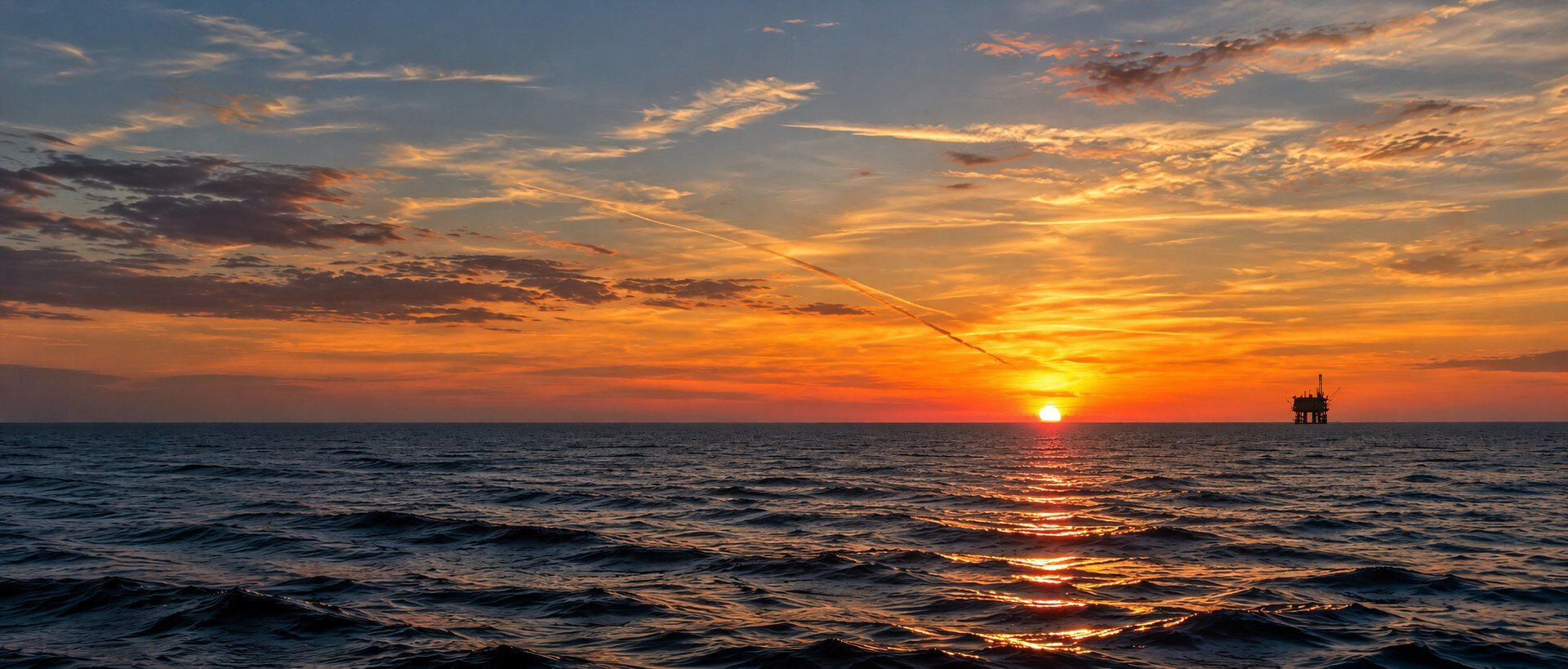
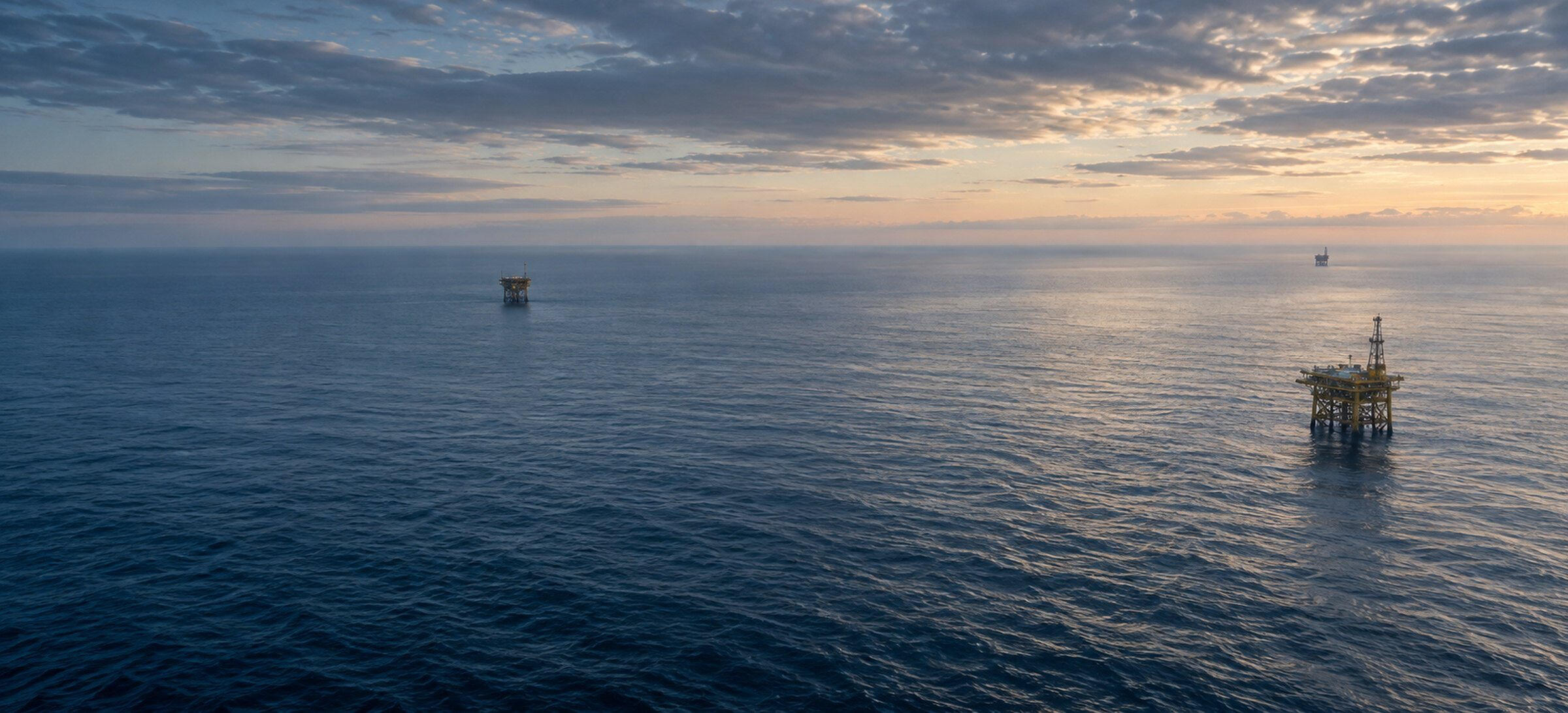
A second life for selected North Sea gas fields
Decades of exploration and production have left the Southern North Sea with something unusually valuable: knowledge. We use it to identify fields that could be suitable for permanent CO₂ storage. Not every field will qualify. Choosing the right ones is fundamental to what we do.
From capture to permanent storage
- 01 · At the emitter's siteCaptureThe emitter captures and conditions its CO₂.
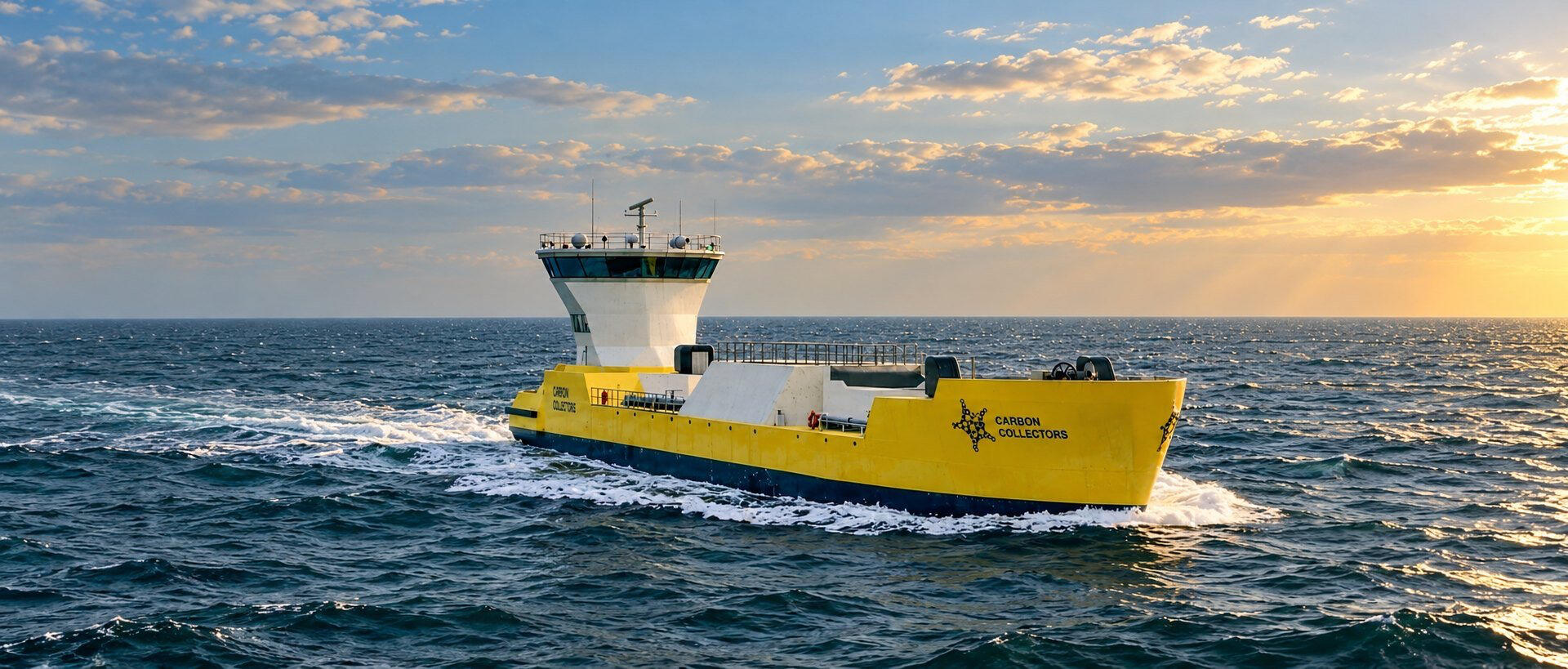
- 02TransportIt travels by ship, without requiring a direct pipeline to the store.
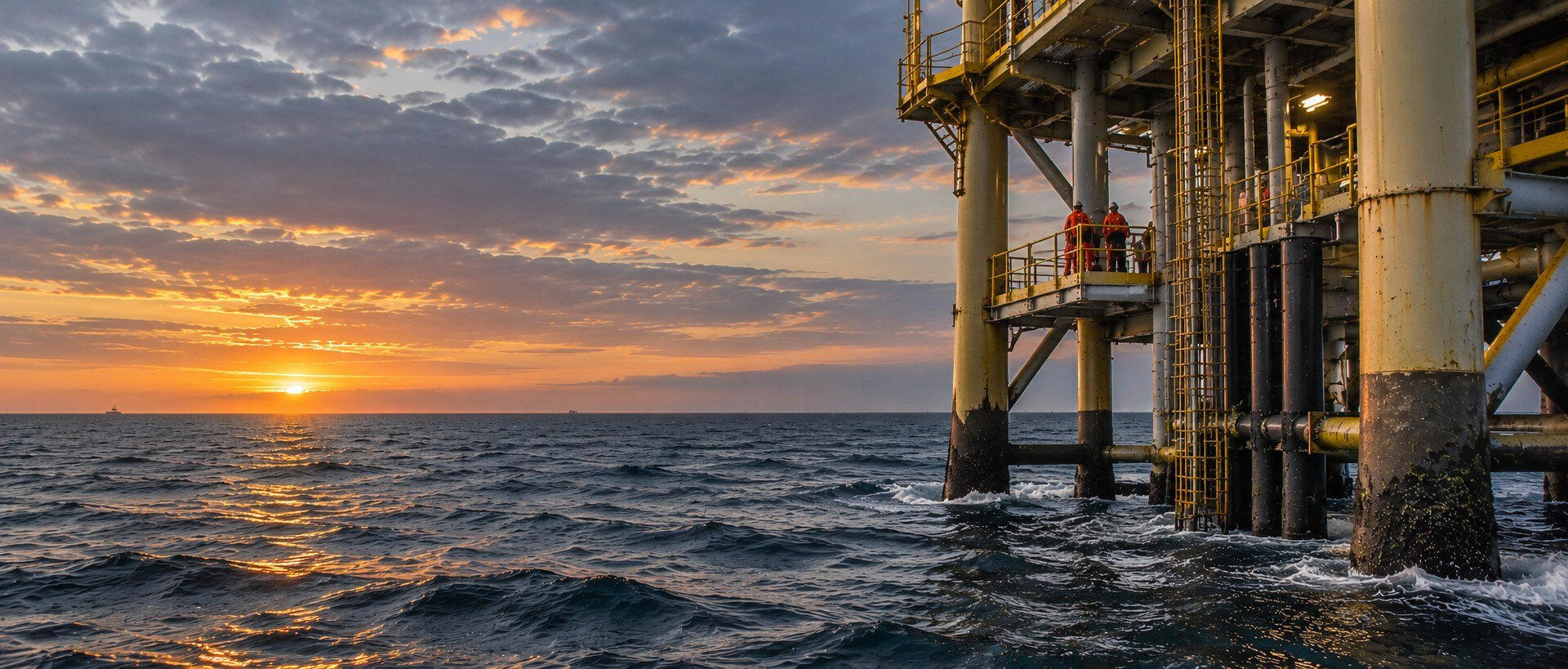
- 03ReceiveOffshore, an offloading system transfers the CO₂ from the ship to the injection system.
- 04StoreIt is injected deep below the seabed into a permitted reservoir.
- 05MonitorThe store is monitored during and after injection.
Six gates, assessed together
Subsurface, wells, infrastructure, permitting, transport and commercial viability are judged together from the start. An opportunity progresses only when all six hold together.
Why depleted gas fields
A field that held gas over geological time is strong evidence of a working seal, and its production history shows how the reservoir behaves. It is a starting point, not a guarantee: wells, pressure, capacity and the condition of the infrastructure are assessed for every opportunity.
Why smaller stores
Large hubs are essential, and we complement them. Smaller stores widen access to storage for different locations and volumes, and each one adds to a growing portfolio.
Reuse where it makes sense
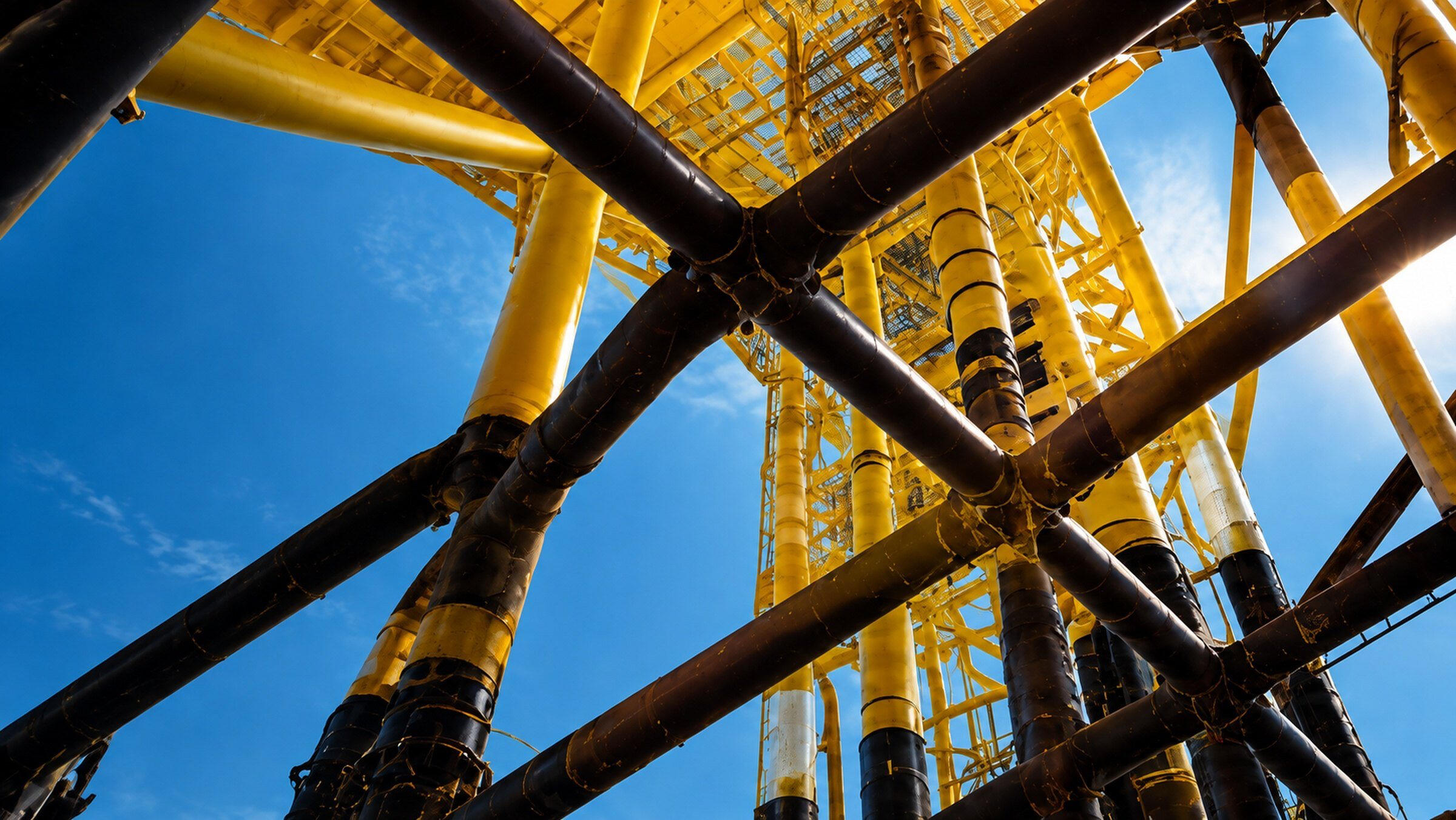
We reuse existing assets only where their condition and integrity are demonstrated. What needs replacing is replaced.
Low impact by design
Reusing existing infrastructure, and keeping emissions and underwater noise low during construction, reduces environmental impact and supports a smoother permitting process.
Safety from the start
Safety begins with choosing the right site. Every project will progress through the applicable Dutch regulatory and permitting framework.
Whether it's a field, a site or a partnership, we'd like to hear about it.
A second life for selected North Sea gas fields
Decades of exploration and production have left the Southern North Sea with something unusually valuable: knowledge. We use it to identify fields that could be suitable for permanent CO₂ storage. Not every field will qualify. Choosing the right ones is fundamental to what we do.
From capture to permanent storage
- 01 · At the emitter's siteCaptureThe emitter captures and conditions its CO₂.
- 02TransportIt travels by ship, without requiring a direct pipeline to the store.
- 03ReceiveOffshore, an offloading system transfers the CO₂ from the ship to the injection system.
- 04StoreIt is injected deep below the seabed into a permitted reservoir.
- 05MonitorThe store is monitored during and after injection.
Six gates, assessed together
Subsurface, wells, infrastructure, permitting, transport and commercial viability are judged together from the start. An opportunity progresses only when all six hold together.
Why depleted gas fields
A field that held gas over geological time is strong evidence of a working seal, and its production history shows how the reservoir behaves. It is a starting point, not a guarantee: wells, pressure, capacity and the condition of the infrastructure are assessed for every opportunity.
Why smaller stores
Large hubs are essential, and we complement them. Smaller stores widen access to storage for different locations and volumes, and each one adds to a growing portfolio.
Reuse where it makes sense
We reuse existing assets only where their condition and integrity are demonstrated. What needs replacing is replaced.
Low impact by design
Reusing existing infrastructure, and keeping emissions and underwater noise low during construction, reduces environmental impact and supports a smoother permitting process.
Safety from the start
Safety begins with choosing the right site. Every project will progress through the applicable Dutch regulatory and permitting framework.
Whether it's a field, a site or a partnership, we'd like to hear about it.
Storage matched to your CO₂ stream
Your CO₂ doesn't come in one size. Capturing it only delivers its full climate benefit with a clear route to permanent storage. That's why we are developing storage around different emitter needs.
More freedom in location
Our stores are designed for CO₂ arriving by ship. Sites with access to a port and a CO₂ export route can reach offshore storage without a direct pipeline to the store.
Flexible on volume
Smaller stores open storage to smaller and variable volumes that don't naturally fit the largest hubs.
Room for different CO₂ streams
Different industrial processes produce CO₂ of different compositions. Rather than assuming one solution fits every emitter, our approach is being developed with different emitter requirements in mind.
Permanent and verifiable
Stored CO₂ is measured, reported and monitored during and after injection, under a Dutch storage permit.
Flexible where you need it.
Permanent where it matters.
Start the conversation early
Storage takes years to develop, and early demand shapes which stores come first. A first conversation needs only four inputs:
- LocationWhere the CO₂ is captured, and the nearest port.
- Indicative annual volumeA range is fine.
- CO₂ specificationThe composition of the captured stream, as far as known.
- Target start dateWhen you aim to start storing.
Before decommissioning, consider a second life
The end of gas production doesn't have to be the end of an asset's useful life. Some depleted Southern North Sea fields may be suitable for permanent CO₂ storage. We work with asset owners to identify and develop the right opportunities.
It takes more than a reservoir
Reuse is pursued where it makes sense, not because infrastructure happens to exist.
Timing matters
The time to evaluate a second life is before key decommissioning decisions become irreversible. Have an asset approaching late life? Let's talk before the options narrow.
For specialist partners
Storage needs expertise in subsurface, wells, offshore engineering, permitting, legal and more. We bring those disciplines together. If yours can make offshore storage safer, simpler or more effective, we'd like to hear from you.
For authorities
Every project will progress through the applicable Dutch regulatory and permitting framework, with containment, safety, environmental impact and long-term stewardship considered from the start. We welcome early dialogue.
The earlier we talk, the more options remain open.
Developing a portfolio of permanent storage infrastructure
Europe's climate policy is creating growing demand for permanent CO₂ storage, and the first generation of storage is centred on the largest clusters. Carbon Haven is developing a complementary model: a portfolio of smaller offshore stores connected to emitters by sea.
Why this model
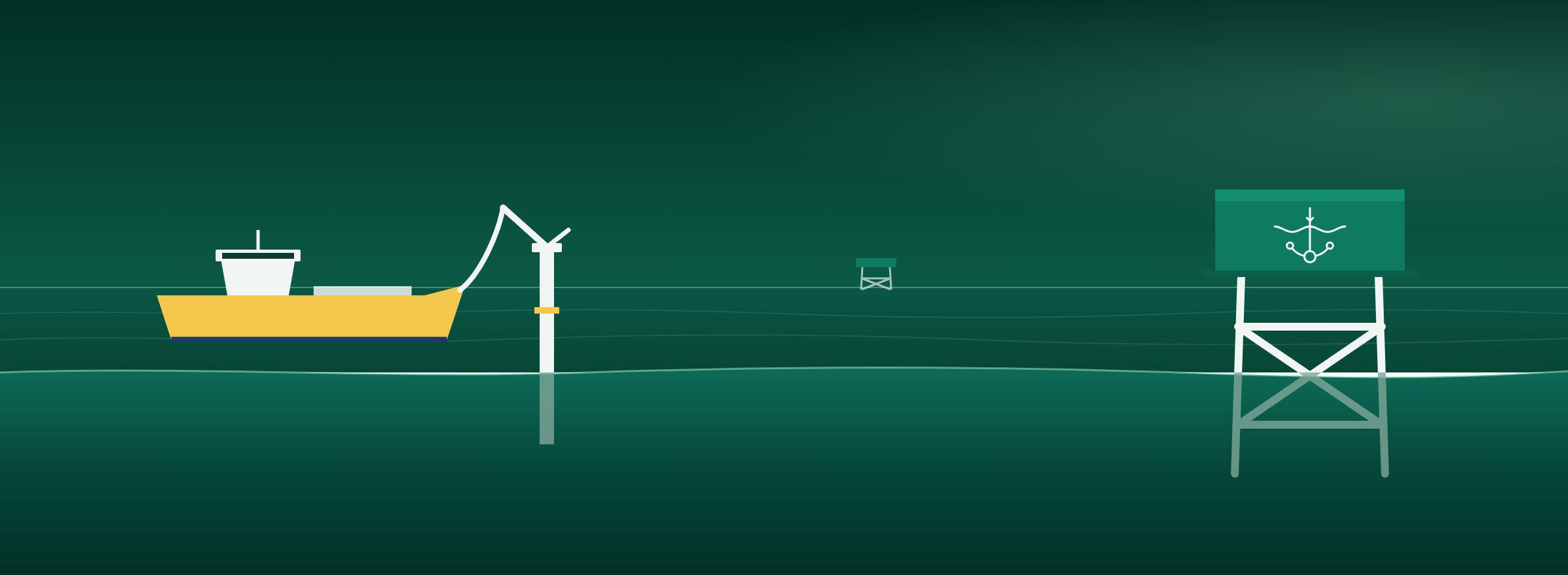
One repeatable concept, scaled as demand grows.
Where we are
An independent Dutch CO₂ storage developer, backed by private investors and supported by specialist teams in subsurface, wells, offshore engineering, permitting and legal. We are developing our first store and the foundations of the portfolio.
Experienced founders
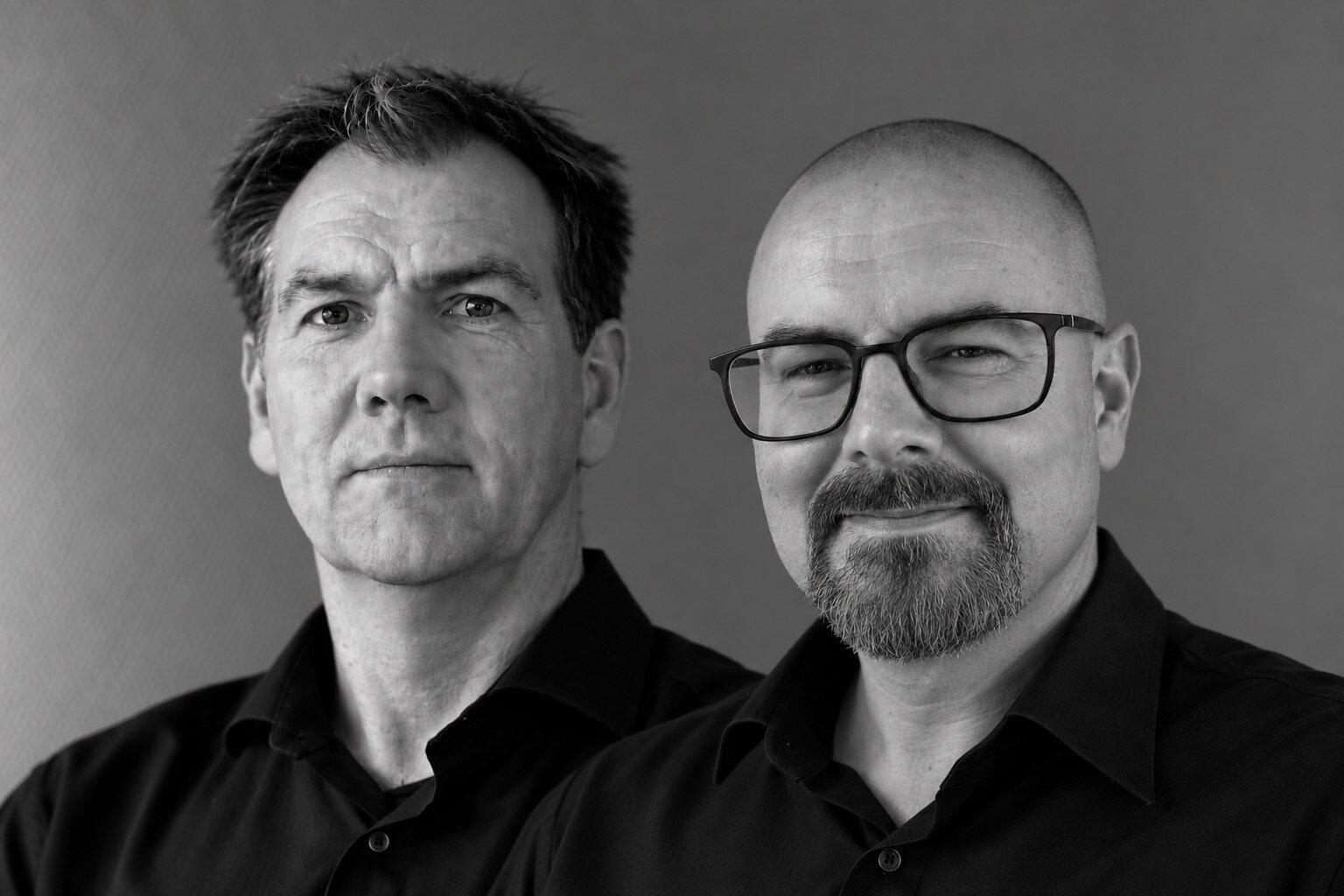
Together, close to 60 years across North Sea subsurface, offshore project delivery, new energy development and large integration programmes. Meet the founders.
We'd be glad to walk you through our approach and where we are.
Built for the next chapter of the North Sea
Carbon Haven B.V. was founded in the Netherlands to make permanent CO₂ storage accessible beyond the major industrial clusters. We believe part of the answer lies beneath the North Sea, in depleted gas fields that may be suitable for a second life. We bring together subsurface knowledge, offshore engineering and project development to turn the right opportunities into permanent storage.
The founders
Let's talk
We'd like to hear from emitters looking for storage, owners weighing the future of a North Sea asset, specialists with relevant expertise and infrastructure investors.
Talk to usOr email us directly at [email protected]